
When 2026 predictions reports get self-aware: Air's Zoltair Speaks
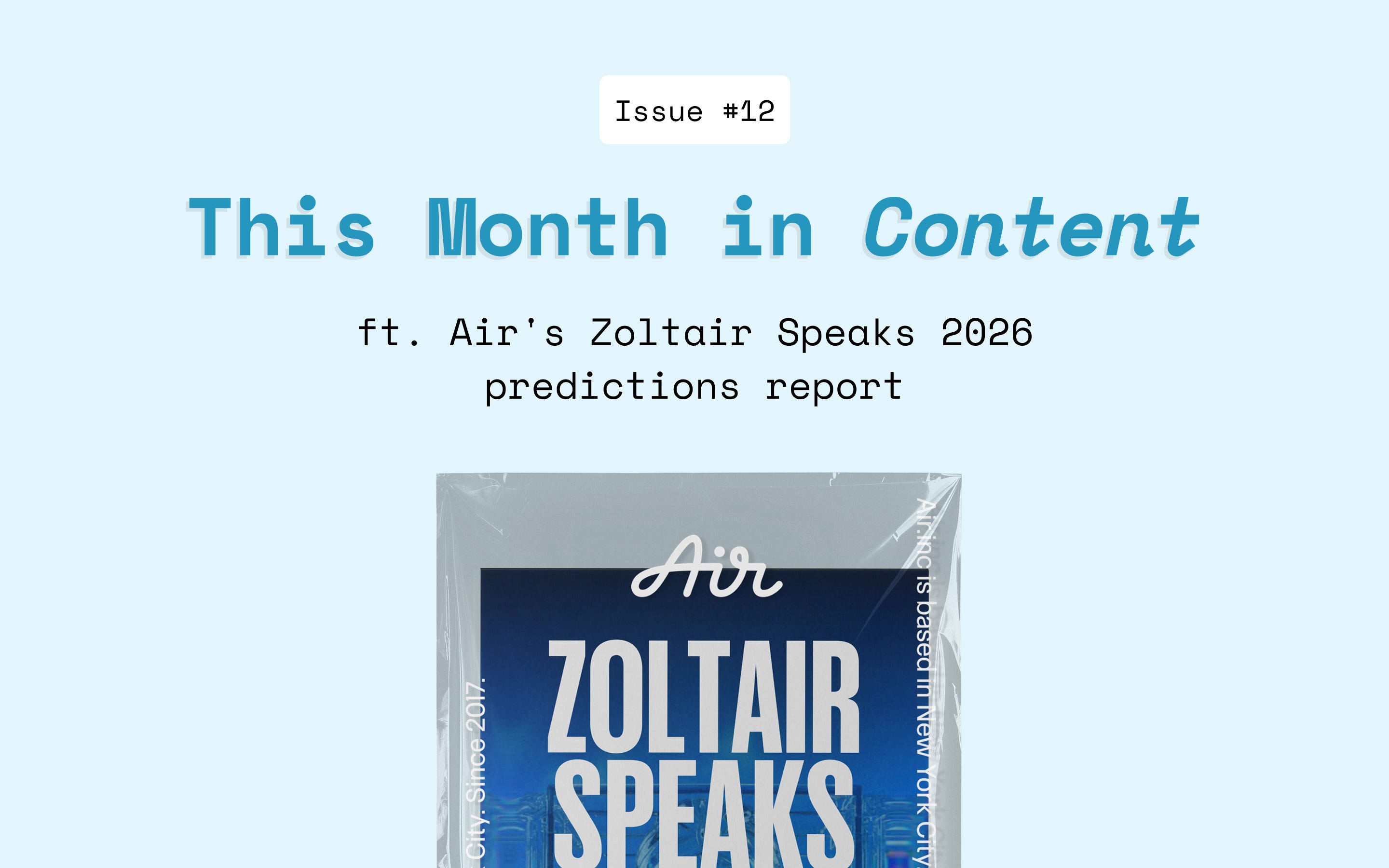
This Month In Content Issue #12

Hey content friends,
It’s that time of year when every B2B brand is publishing their 2026 predictions report. Most are forgettable – the same regurgitated trends you’ve seen everywhere else.
So when a predictions report actually cuts through the noise by being self-aware about how overdone the format is, it’s getting added to my ideas log.
But Air‘s ZoltairSpeaks isn’t just worth covering for the self-awareness of a tired format.
It’s also a timely New Year reminder that you don’t need to overcomplicate thought leadership – sometimes the smartest strategy is keeping it simple and letting your network do the heavy lifting.
Let’s dive in.

This Month in Content Examples: Air’s Zoltair Speaks
What they did:
Air automates creative operations – helping teams collect, approve, and share creative content. Their audience is brand marketers and creative teams.
Recently, their team created Zoltair Speaks.
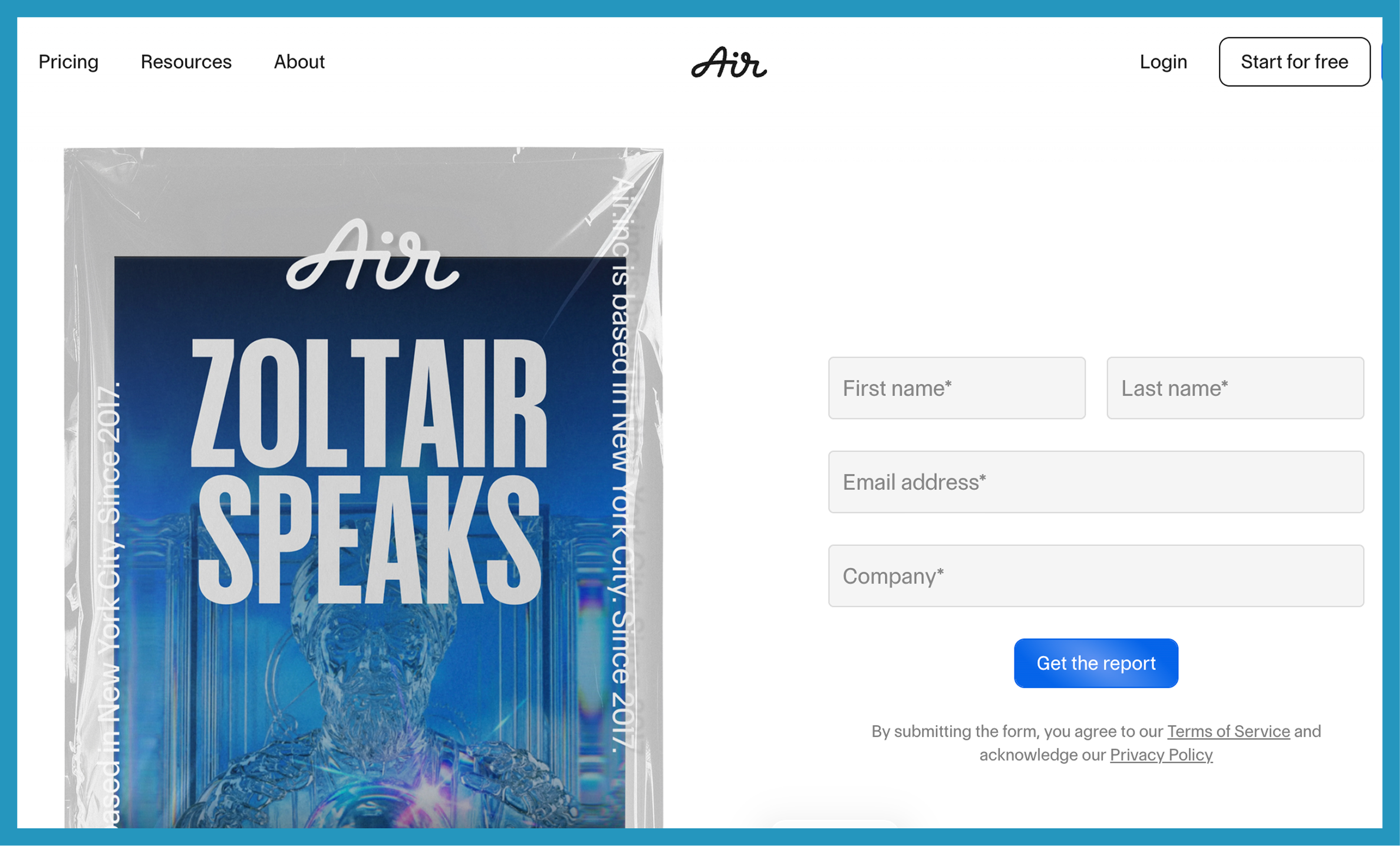
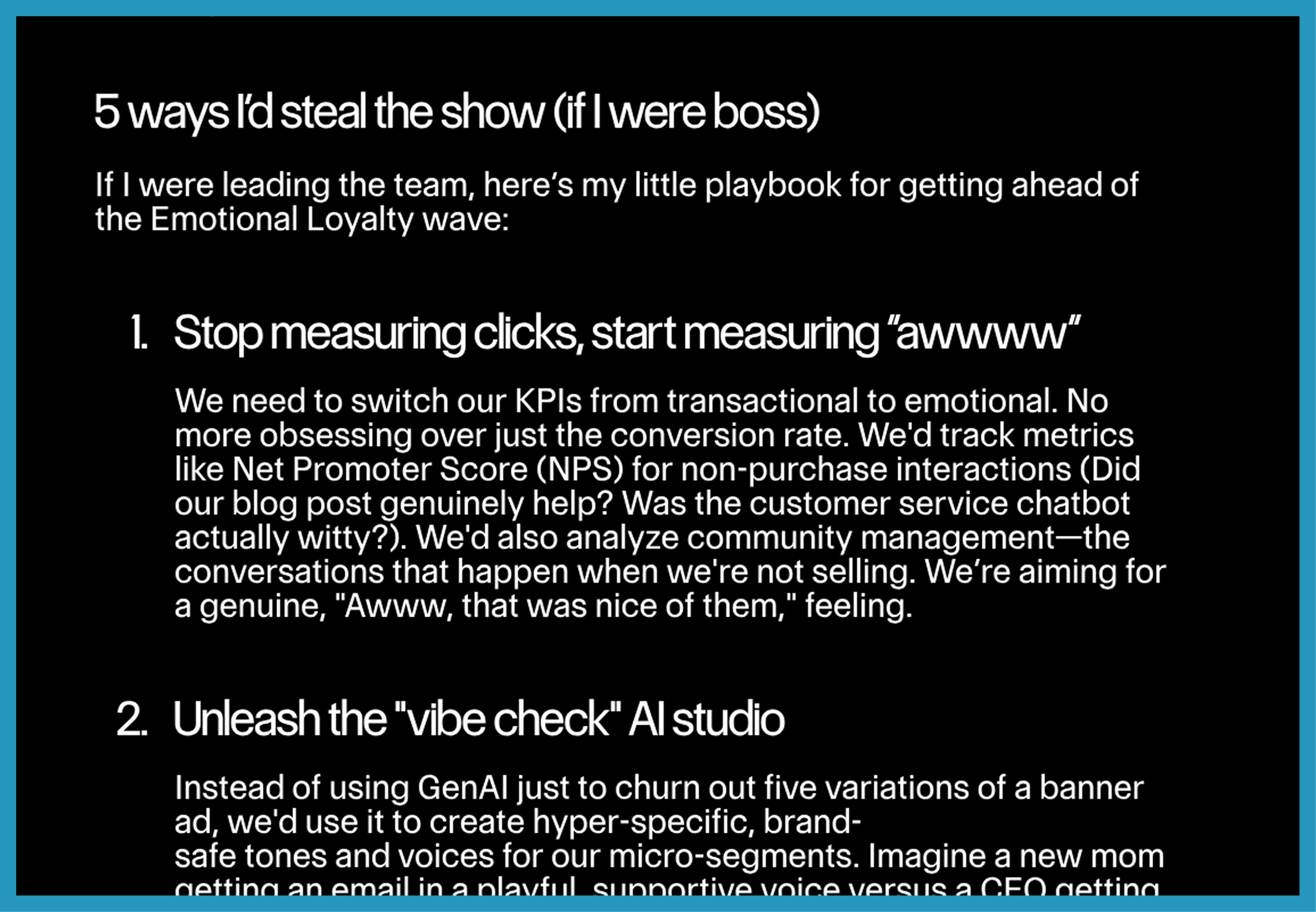
It’s billed as a ‘2026 trends report’ – but in reality it’s a refreshingly simple collection of 21 predictions from marketing leaders, sharing their one take on what to prioritise in 2026 and why, with actionable advice.
The report is gated (give your email, get the PDF), and it’s delivered in-app – or at least appears to be – which gives users a subtle introduction to Air’s product while they’re accessing content they actually want.
The name is a clever nod to Zoltar, the mystical fortune-telling machine from the movie Big – it’s playful, nostalgic, and thematically perfect (fortune teller meets predictions content).
But it’s also tongue-in-cheek – comparing your trends report to a carnival fortune-teller signals you’re not taking the format too seriously.
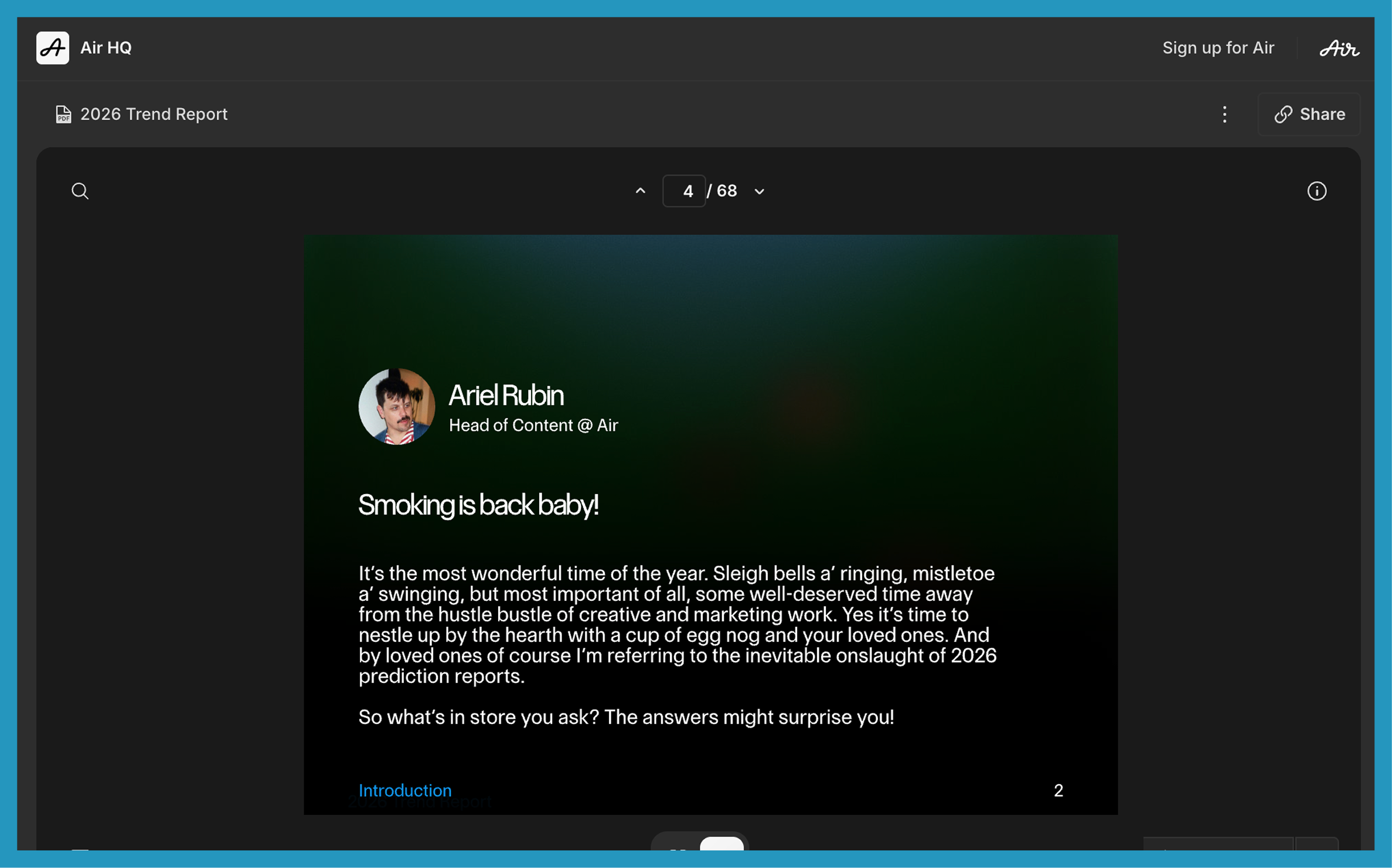
The introduction by Ariel Rubin (Head of Content at Air) lens into that self-awareness further: “It’s time to nestle up by the hearth with a cup of egg nog and your loved ones. And by loved ones of course I’m referring to the inevitable onslaught of 2026 prediction reports.”
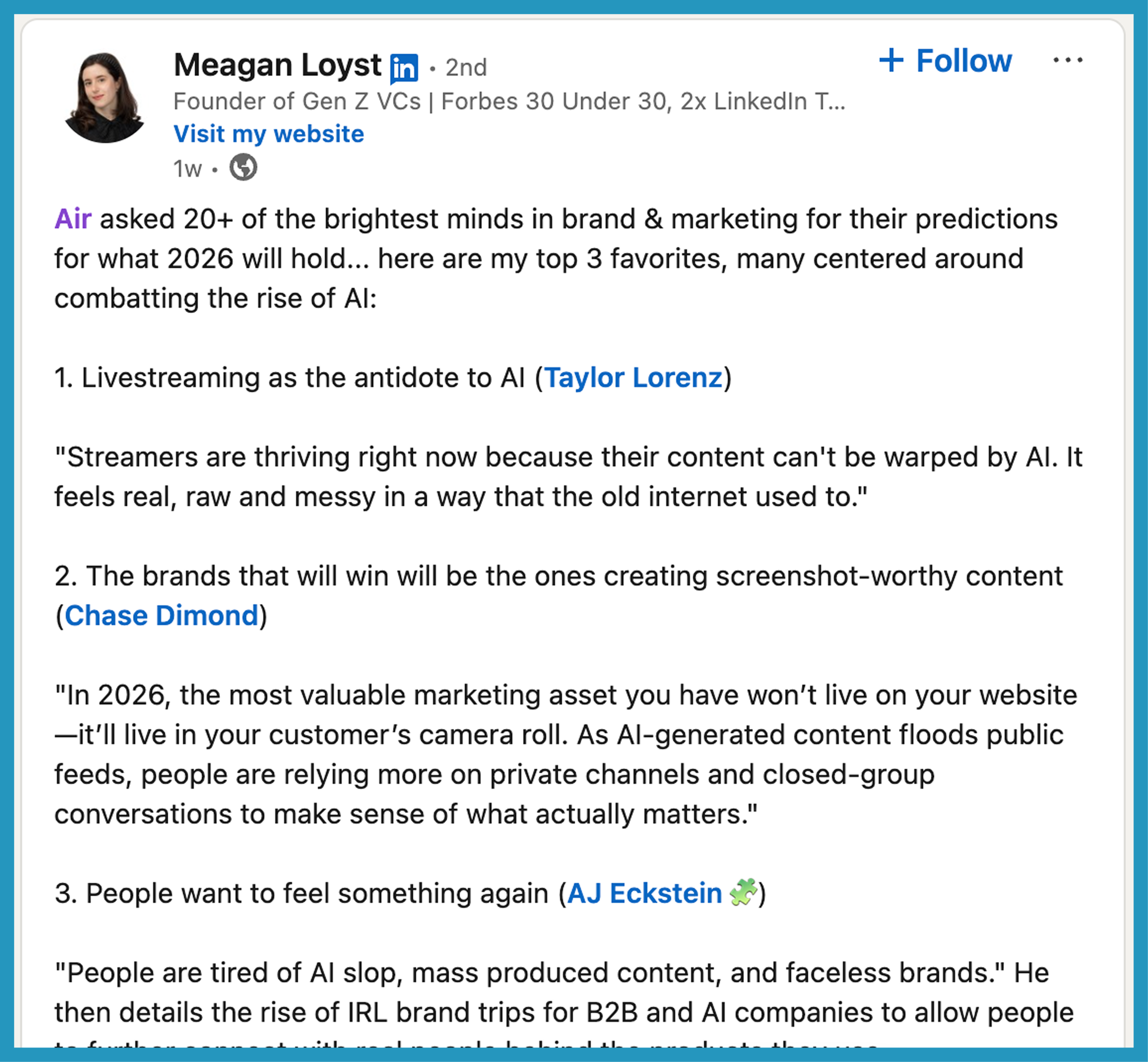
Air worked with marketing influencers and friends of the brand to contribute predictions, then paid them to distribute the report to their own audiences.
Take Meagan Loyst‘s post sharing her top 3 favourite predictions from the report – it’s an authentic reflection that doubles as distribution.
What makes it a great content marketing example:
Self-awareness cuts through the noise. Every brand publishes predictions or trends content this time of year, and most of it blends together into a mush of rehashed advice. By acknowledging upfront that predictions reports are overdone, Air immediately differentiates themselves. The Zoltar reference reinforces this – it’s whimsical and nostalgic (appeals to marketers who appreciate creative references), thematically perfect (fortune teller = predictions), and shows Air’s brand voice is playful rather than corporate. It’s the kind of creative touch that makes content memorable.
Format makes it actually readable. Most predictions reports are dense, data-heavy documents that get skimmed once and forgotten. Air’s approach – one prediction per person, actionable advice, clear formatting – makes it something you’d actually read through. Yes, it’s still a gated PDF (this is my one criticism, personally, I do think this could’ve worked brilliantly as a blog series or even just social posts), but the bite-sized format and space given to each contributor makes it feel more like genuine thought leadership than a list of crowdsourced trends.
Crowdsourced authority over manufactured expertise. Instead of Air positioning themselves as the prediction experts (which is where a lot of the emptiness in this overdone format tends to come from), they let practitioners speak. It’s the curator approach we’ve seen work for brands like Storyblok and Typeform too – amplifying diverse voices builds more credibility than claiming to have all the answers yourself.
Built-in distribution through contributor network. By featuring 20 marketing leaders, Air created 20 people incentivised to share the report with their own audiences. The ensuing influencer ad partnerships (like Maegan Loyst’s post) feel authentic because they’re genuinely highlighting insights they found valuable, not just promoting Air.
Simplicity as strategy. Most thought leadership content involves months of research, data wrangling, and coordination with multiple partners. Air asked 20 marketing leaders for their one honest take, compiled it, shipped it. It’s a reminder that you don’t need a massive production to create valuable content – sometimes the simplest format with interesting voices is the most effective.
Product integration without the sales pitch. Delivering the report in-app gives users a taste of Air’s product while accessing content they want. It’s a subtle way to bring product education into educational content – showing what Air does without making the report about Air. Brands often struggle to bridge top-of-funnel brand content and bottom-of-funnel product content, but Air threads that needle naturally.
What this example made me reflect on for my own work:
Are we overcomplicating our thought leadership or original research content? What could we simplify while maintaining (or increasing) value?
Who in our network could we feature or collaborate with to naturally extend distribution into paid partnerships?
- Where could we bring subtle product education into our brand content without making it feel sales-y?
Kudos to the Air team for this one 👏
What content examples have caught your attention lately? Hit reply and let me know – I’m always on the lookout for the most creative, unique, inspirational examples to cover.
Speak soon,
Tabitha
P.S. If you found this useful, please share it with a fellow content marketer. Word of mouth is how we grow this little community 🫶
Let’s dive in.