
When case studies stop feeling like sales collateral: Vector’s Proven Playbooks
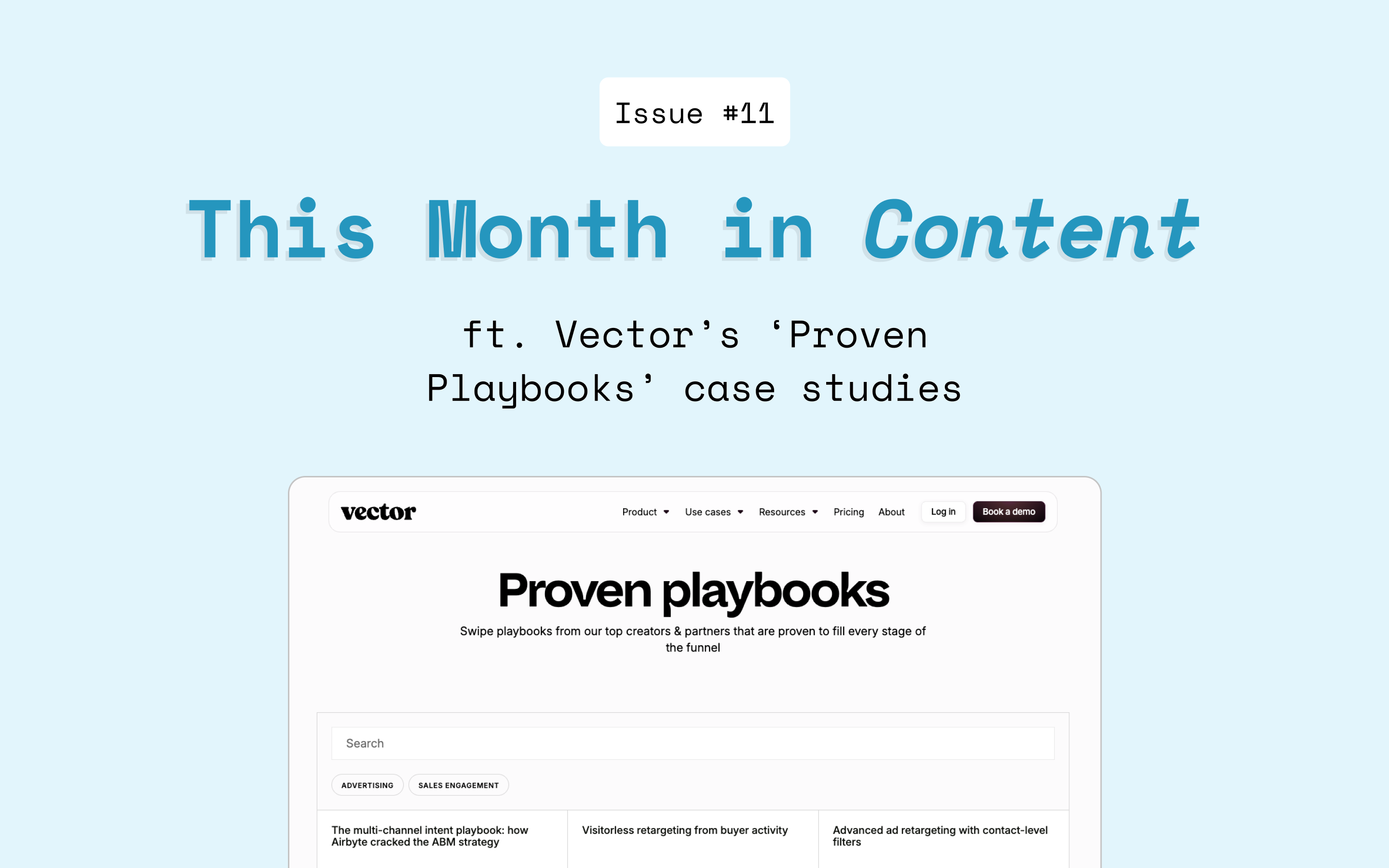
This Month In Content Issue #11 | One standout B2B content marketing example each edition

Hey content friends,
December’s here, which means we’re all in that strange limbo between wrapping up 2025 campaigns and planning our big bets for 2026.
If you’re anything like me, you’re oscillating between “let’s make next year incredible” energy and “please let me collapse on the sofa for two weeks.”
This year we’ve covered some brilliant B2B content examples in this newsletter – from Typeform’s Get Real research putting real voices front and centre, to UserEvidence’s The Long Game proving B2B content can be binge-worthy – and you can check back at those anytime on Substack (think of it as your pre-made content swipe file).
But before we all disappear for a well-deserved break, we have one last content example to share – this month, it’s Vector’s Proven Playbooks.
Let’s dive in.
This Month in Content Examples: Vector’s Proven Playbooks
What they did:
I don’t know about you, but Vector’s been popping up all over my LinkedIn feed this year – and providing some serious inspiration when they do.
There are plenty of things I’ve admired – the create-your-own-ghosty generator, Jess Cook sharing their marketing strategy in real-time (via her LinkedIn posts, the bi-weekly Vector newsletter, and the ‘This Meeting Could Have Been a Podcast’ podcast), the influencer posts for new features, the comedy brand ads. Plenty to admire.
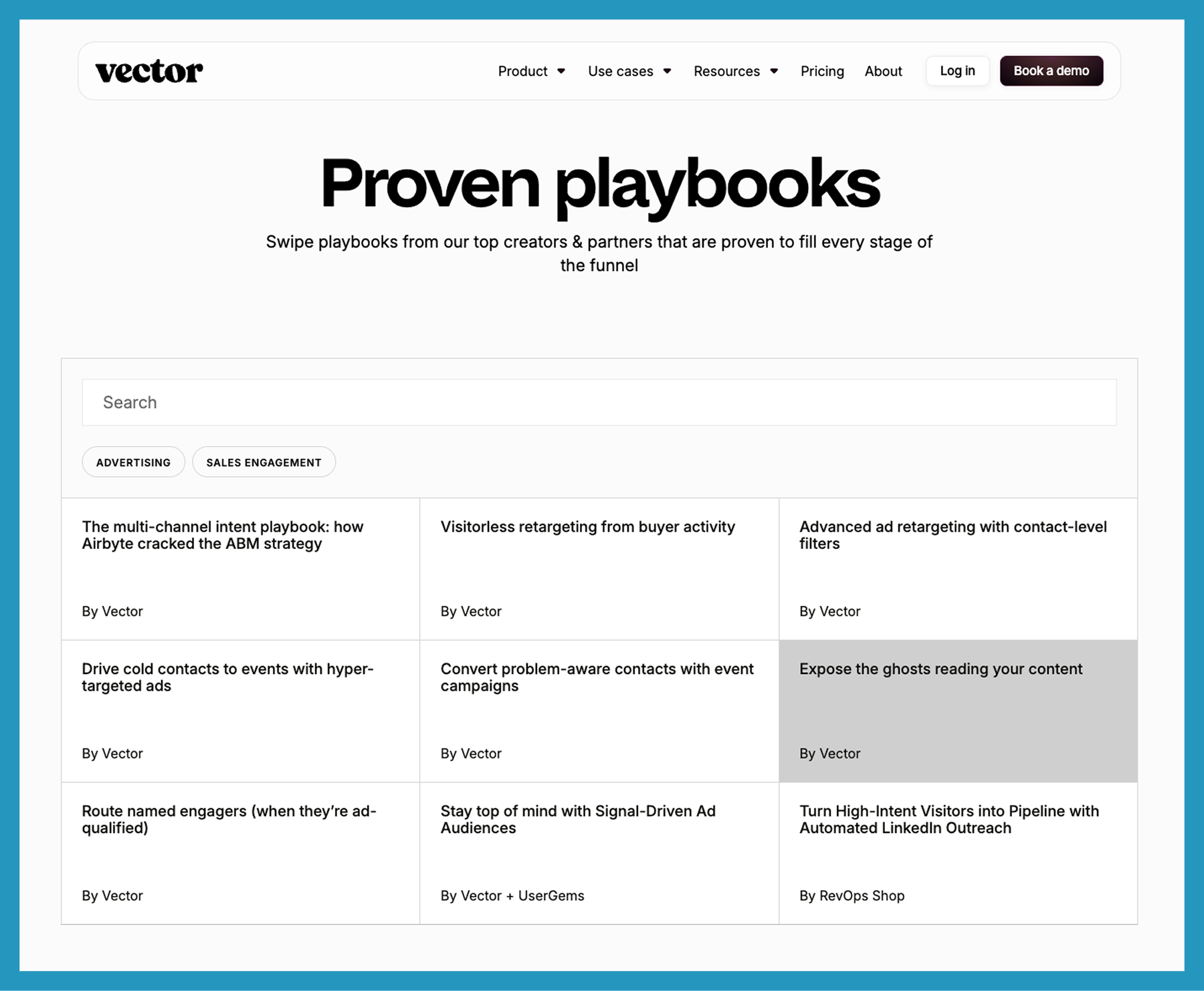
But the one I want to call out in this month’s edition is their ‘Proven Playbooks’.
With that list of fun brand content examples, it might be surprising that this is the one I picked.
Don’t get me wrong, I love a brand marketing campaign as much as the next marketer – but I also have huge respect for product content done well, because it’s definitely not a given.
And Vector took what could’ve been bog standard case studies and use cases and turned them into tactical, educational playbooks instead.
Each playbook takes a known problem that demand gen and growth marketers face, suggests a specific tactic to solve it, and then proves it works by showing how real companies have implemented it.
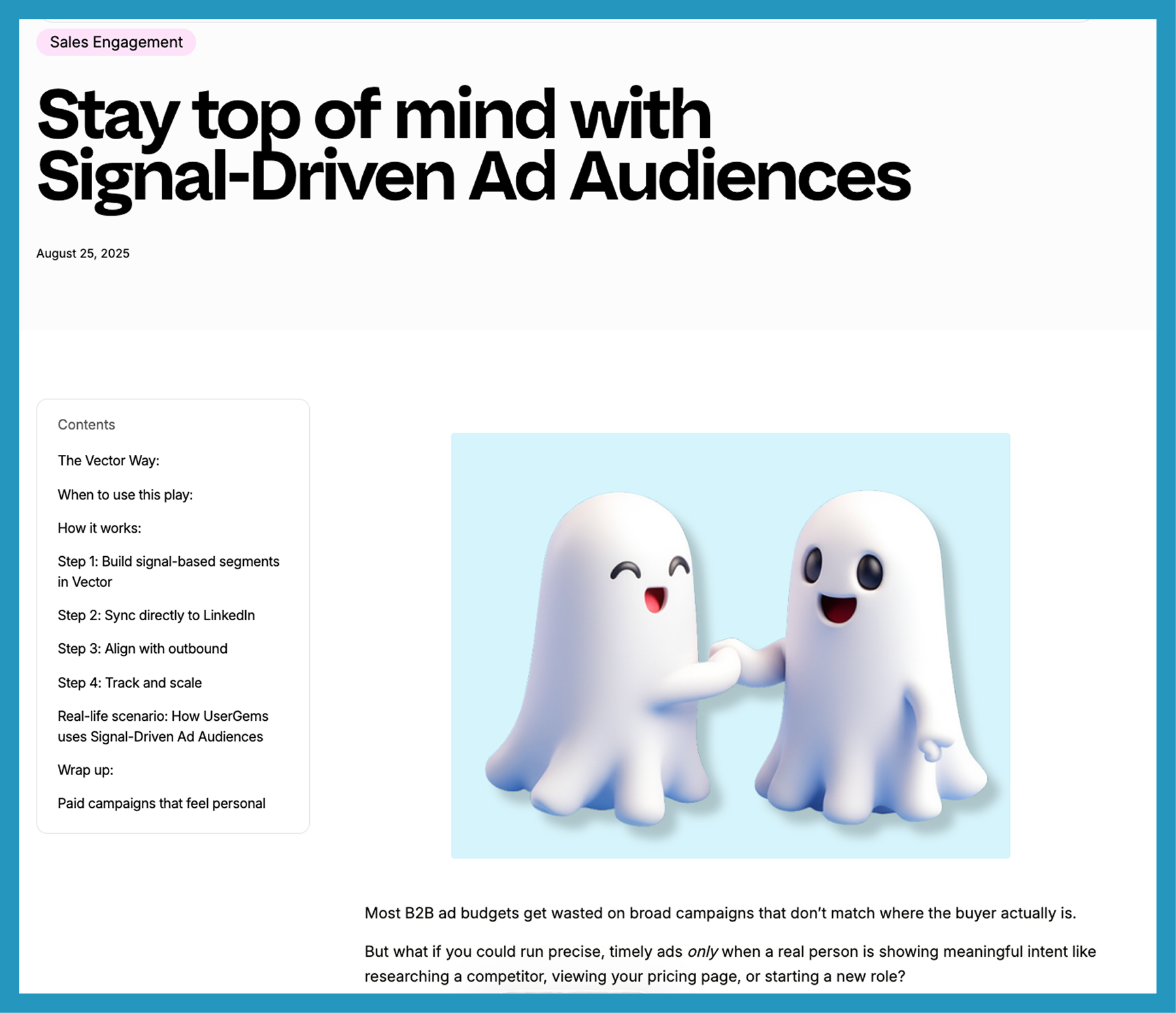
Take their “Stay top of mind with Signal-Driven Ad Audiences” playbook as an example.
The problem: wasted ad budgets because you’re stuck with broad campaign audiences.
The tactic: target contact-level audiences instead of company-level, and when a contact does take a specific, high intent action, automatically build them into a LinkedIn audience and add them to outbound.
The proof: sharing how UserGems does this using Vector.
Some playbooks feature partners or customers, others are Vector themselves sharing different ways to use their platform.
It’s a mix between product-led use case content, case studies, tools and templates, and educational content – blurring all the lines in the best way. It doesn’t feel like a traditional case study – it feels like learning from peers who’ve figured something out.
What makes it a great example of B2B content marketing:
Educational first, product second. Each playbook gives genuinely useful tactical advice and examples of what works, even if you weren’t planning to use Vector to do it. But they naturally weave in Vector’s product value and show real customers using it to achieve results. That builds brand affiliation whilst also building product understanding – you’re learning something valuable, and Vector’s the helpful guide making it happen.
Escapes the case study sameness trap. Most B2B case studies follow the same tired format and feel painfully sales-y. These playbooks feel tactical and useful – something you’d actually bookmark and come back to, whilst also offering that much-needed social proof.
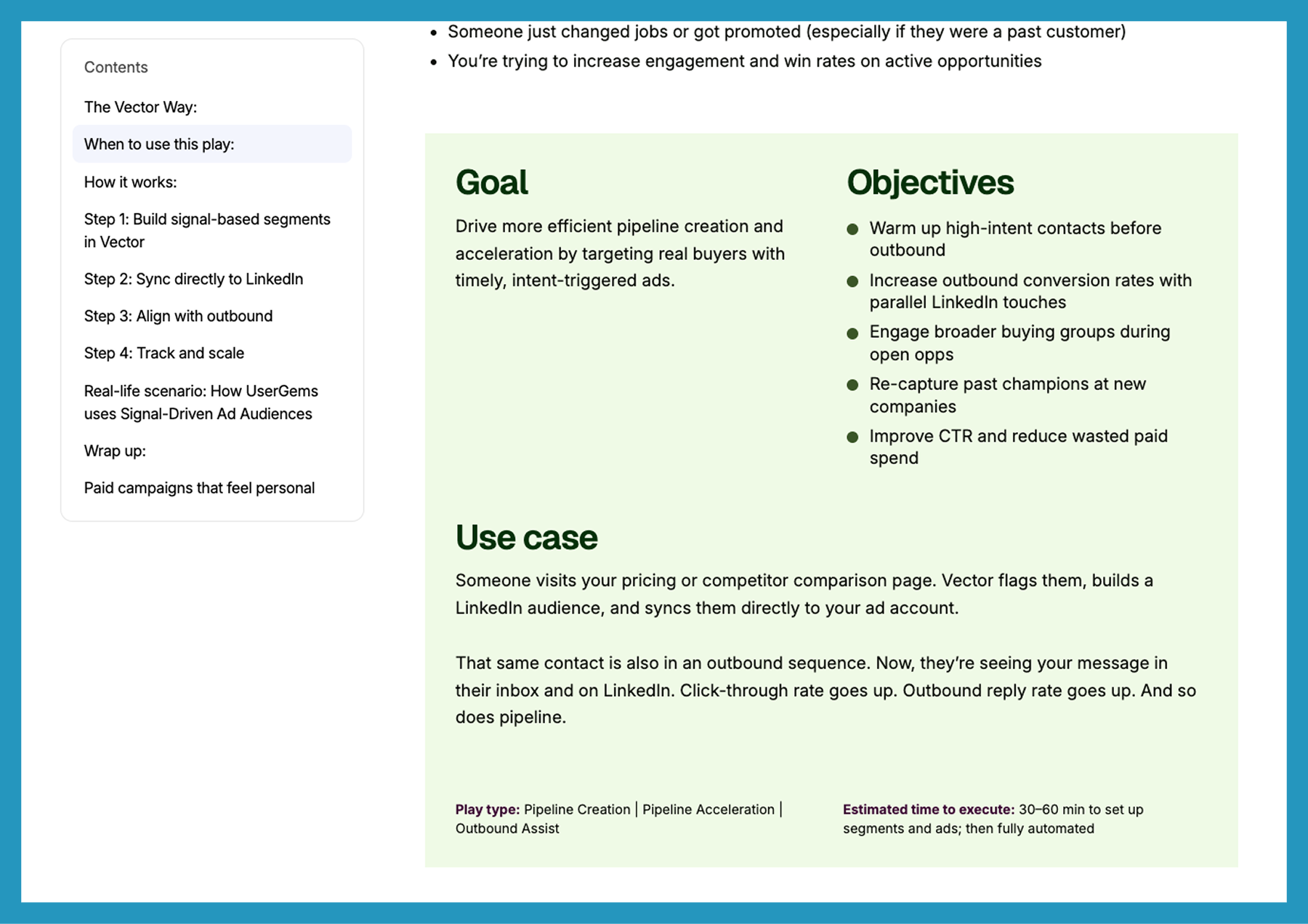
Formatted for how their audience actually works. Each playbook is structured the way a growth or demand gen marketer would need it: clear goal, specific objectives, time to execute, framed as an experiment to test – it’s a subtle way to show they know their audience well.
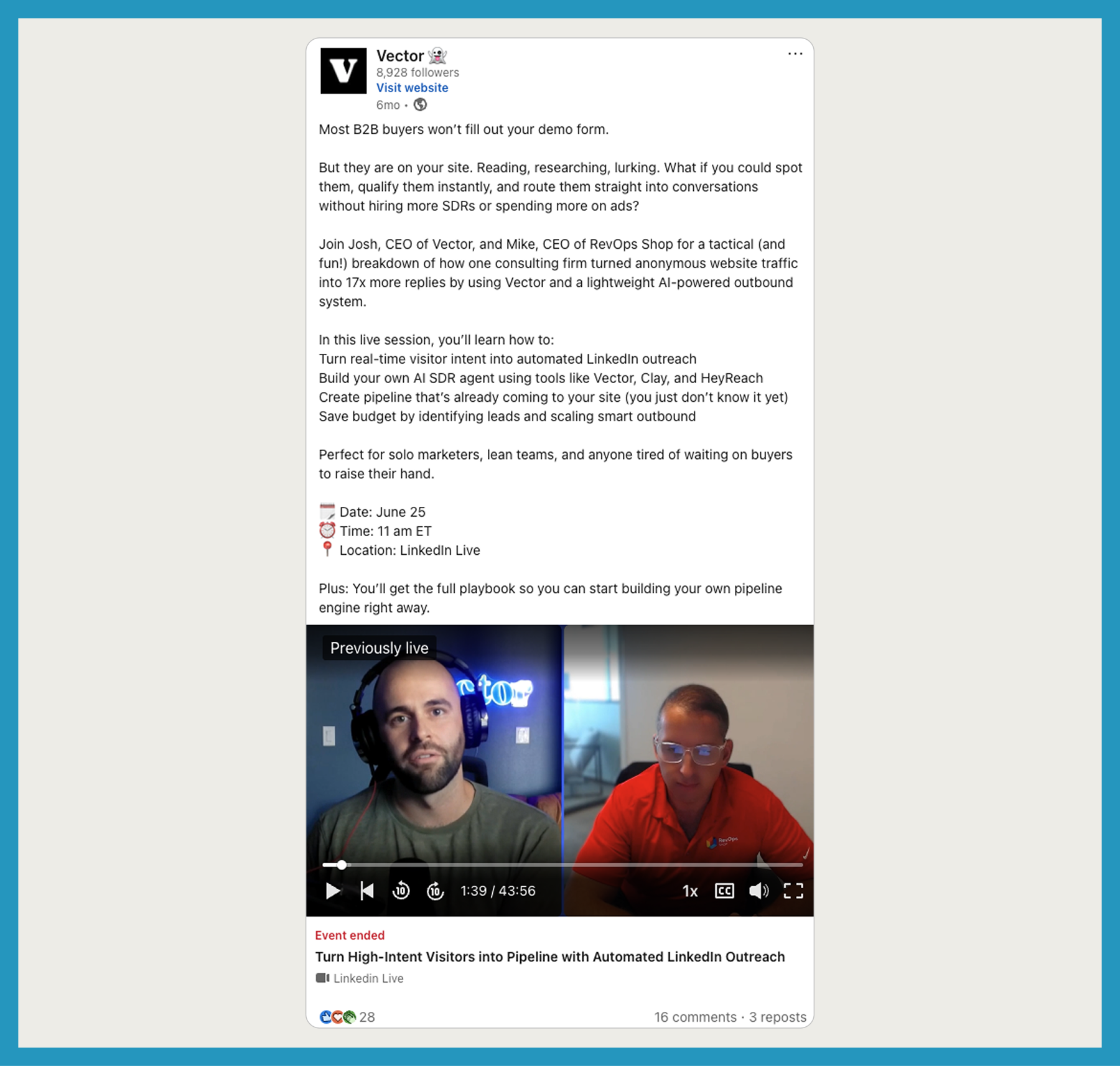
A strong foundation for multi-format distribution. The playbooks also act as foundational content, which can become the jumping-off point for other formats and channels – like the RevOps Shop case study on automating LinkedIn outreach which was turned into a LinkedIn Live workshop, with Josh Perk (Vector’s CEO) talking through the playbook with the CEO of RevOps Shop.
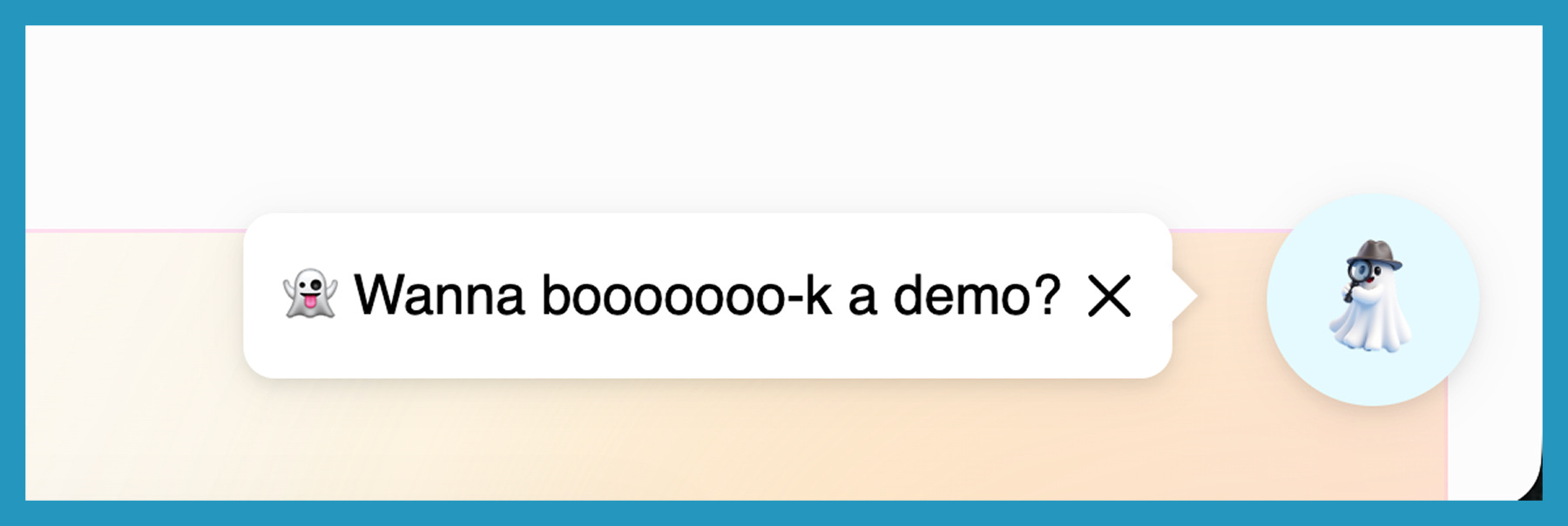
Plus, they get extra brownie points for the “Wanna booooo-k a demo?” CTA that pops up in the bottom right of the website.
Most B2B brands are pretty bland, and those that do try to have personality often go too far the other way towards painfully try-hard. Vector found the sweet spot with their distinct and memorable ghost mascot, which lets them bring little touches of personality without forcing it.
Kudos to Jess Cook and the Vector team for this one – excited to see what you cook up in 2026 👏
That’s it for this edition!
Thanks for being part of this little community this year. I’ll be back in January with more examples of B2B content that’s actually worth paying attention to.
In the meantime, if you found this useful, please share it with a fellow content marketer. Word of mouth is how we grow 🫶
Enjoy the break – you’ve earned it.
Speak soon,
Tabitha